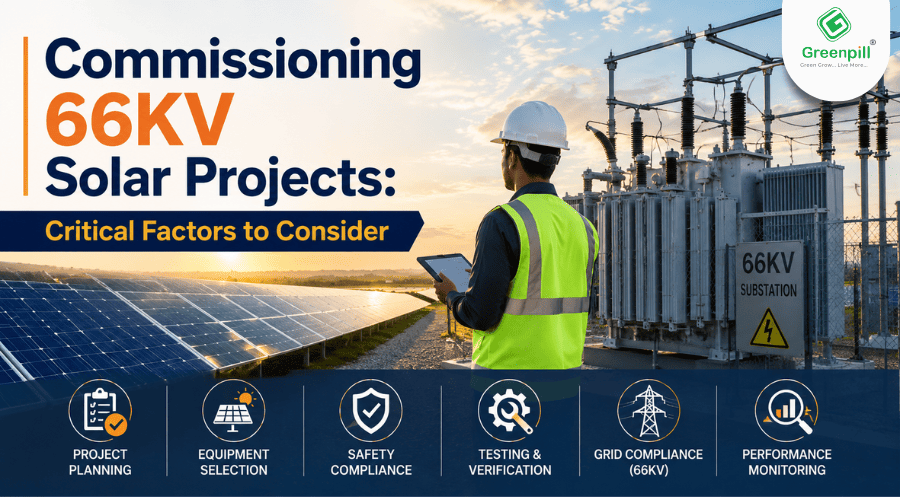
Commissioning 66KV Solar Projects: Critical Factors to Consider
The rapid growth of utility-scale solar energy projects has increased the importance of efficient and reliable commissioning processes. In large-scale renewable energy infrastructure, commissioning is the final and one of the most critical stages before a solar power plant becomes operational and starts supplying electricity to the grid.
A 66KV solar project involves high-voltage electrical systems, advanced protection mechanisms, synchronization procedures, and extensive testing activities. Proper commissioning ensures that every component of the solar plant performs safely, efficiently, and according to regulatory standards.
This article explains the critical factors involved in commissioning 66KV solar projects, the technical procedures followed during the process, and the challenges developers and EPC contractors must address before commercial operation begins.
What is Solar Plant Commissioning?
Solar plant commissioning is the process of inspecting, testing, verifying, and validating all systems and equipment before the plant is officially energized and connected to the utility grid.
The objective of commissioning is to ensure:
- Safe plant operation
- Proper equipment performance
- Compliance with grid regulations
- Reliable energy generation
- Long-term operational efficiency
In a 66KV solar project, commissioning activities are more complex because they involve high-voltage substations, transmission systems, and grid synchronization procedures.
Major Components Involved in 66KV Solar Projects
Before commissioning begins, all major electrical and mechanical systems must be fully installed and tested.
Key components include:
- Solar PV modules
- String combiner boxes
- Inverters
- Power transformers
- 66KV switchyard equipment
- Protection relays
- SCADA systems
- Transmission lines
- Earthing and lightning protection systems
- Metering systems
Each component requires individual inspection and integrated system testing before energization approval is granted.
Critical Factors to Consider During 66KV Solar Project Commissioning
1. Detailed Pre-Commissioning Inspection
Pre-commissioning inspection is the foundation of successful project execution.
Before electrical energization, engineers verify:
- Mechanical installation quality
- Cable routing and termination
- Equipment alignment
- Tightness of electrical connections
- Earthing continuity
- Labeling and identification systems
- Transformer oil levels
- Panel wiring accuracy
Any installation defect identified during this stage can lead to operational failure or safety risks after energization.
Proper documentation is equally important during inspection activities.
2. Protection System Testing
Protection systems play a critical role in high-voltage solar plants.
A 66KV project must include properly configured protection relays to safeguard equipment against:
- Overcurrent faults
- Earth faults
- Voltage fluctuations
- Frequency instability
- Transformer faults
- Grid disturbances
Protection relay testing typically includes:
- Secondary injection testing
- Relay calibration
- Trip logic verification
- Interlocking checks
- Breaker operation testing
Incorrect relay coordination can result in unnecessary plant shutdowns or severe equipment damage.
3. Transformer Testing and Verification
Power transformers are among the most critical assets in a solar power plant.
Commissioning engineers conduct multiple tests before transformer energization, including:
- Insulation resistance testing
- Turns ratio testing
- Vector group verification
- Oil BDV testing
- Winding resistance measurement
- Magnetic balance testing
Transformer protection systems such as Buchholz relays, pressure relief devices, and temperature monitoring systems must also be verified.
Even minor transformer issues can affect overall plant reliability and grid stability.
4. SCADA and Communication System Integration
Modern utility-scale solar projects rely heavily on SCADA systems for plant monitoring and control.
During commissioning, SCADA integration ensures:
- Real-time monitoring
- Data acquisition accuracy
- Remote operation capability
- Alarm generation
- Performance analytics
- Grid communication compliance
Critical communication systems tested during commissioning include:
- Fiber optic networks
- Remote Terminal Units (RTUs)
- Weather monitoring stations
- Energy meters
- Inverter communication protocols
Accurate SCADA functionality is essential for long-term operation and maintenance activities.
5. Grid Synchronization Process
Grid synchronization is one of the most sensitive stages of commissioning a 66KV solar project.
Before synchronization approval is granted, engineers must confirm:
- Voltage matching
- Frequency matching
- Phase sequence alignment
- Protection coordination
- Grid compliance parameters
Utility authorities usually supervise this process to ensure system stability and safety.
Improper synchronization can lead to:
- Equipment damage
- System instability
- Transformer tripping
- Power quality issues
Successful synchronization confirms that the solar plant is ready for power export to the grid.
6. Earthing and Lightning Protection Testing
Effective earthing systems are essential for personnel safety and equipment protection.
Commissioning teams perform several tests, including:
- Earth resistance testing
- Continuity testing
- Step and touch potential verification
- Lightning arrester inspection
Poor grounding can expose the plant to:
- Electrical shock hazards
- Equipment failure
- Lightning damage
- Fault current circulation issues
For large-scale solar projects operating at 66KV, maintaining proper grounding standards is mandatory.
7. Performance Ratio and Generation Validation
Once the plant is energized, performance validation begins.
Engineers monitor:
- Energy generation output
- Inverter efficiency
- Module performance
- Performance ratio (PR)
- Specific yield
- Grid export values
These tests help confirm that the plant operates according to design expectations and contractual guarantees.
Performance benchmarking is especially important for investors, developers, and utility companies.
8. Compliance with Utility and Regulatory Standards
Every 66KV solar project must comply with utility and government regulations before commercial operation begins.
Common compliance areas include:
- Grid code requirements
- Electrical safety standards
- Metering approvals
- Transmission utility clearances
- Environmental compliance
- Protection coordination approvals
Failure to meet regulatory requirements can delay project commissioning and financial closure.
Close coordination with utility authorities is essential throughout the commissioning phase.
9. Safety Management During Commissioning
Commissioning activities involve high-risk electrical operations.
Strict safety protocols must be followed during:
- HV testing
- Breaker operation
- Transformer energization
- Cable testing
- Grid synchronization
Key safety practices include:
- Lockout-tagout procedures
- Permit-to-work systems
- PPE compliance
- Emergency response planning
- Isolation verification
- Arc flash protection measures
A strong safety culture minimizes operational risks and protects commissioning personnel.
10. Documentation and Final Handover
Comprehensive documentation is required before the solar plant is handed over for commercial operation.
Important commissioning documents include:
- Test reports
- Relay settings records
- As-built drawings
- Equipment datasheets
- Inspection reports
- SCADA configuration records
- Utility approvals
- Warranty documentation
Accurate documentation supports future maintenance, troubleshooting, and regulatory audits.
Conclusion
Commissioning a 66KV solar project is a highly technical and critical phase that determines the long-term reliability, safety, and efficiency of the solar power plant.
From protection system testing and transformer verification to SCADA integration and grid synchronization, every activity must be carefully executed according to industry standards and utility regulations.
As utility-scale solar installations continue to expand globally, professional commissioning practices have become essential for ensuring stable grid integration and maximizing renewable energy performance.
A well-commissioned solar plant not only improves operational efficiency but also reduces downtime, minimizes risks, and supports sustainable energy generation for years to come.