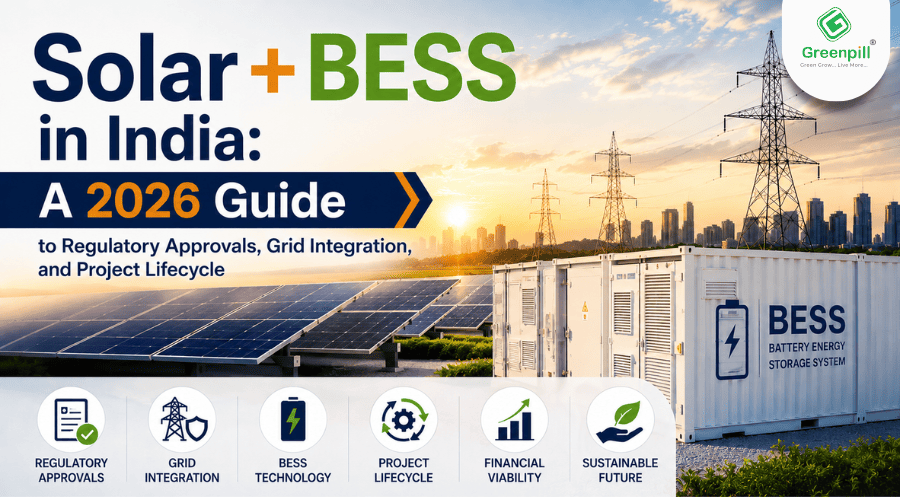
Solar + BESS in India: A 2026 Guide to Regulatory Approvals, Grid Integration, and Project Lifecycle
Overview
Solar + BESS (Battery Energy Storage Systems) projects in India combine solar generation with energy storage to improve grid reliability, manage peak demand, and enable renewable integration. In 2026, success depends on securing regulatory approvals, ensuring seamless grid integration, and executing a well-planned project lifecycle from feasibility to commissioning.
- Solar + BESS integrates renewable generation with storage for reliability
- Regulatory approvals include DISCOM, CEIG, and grid compliance
- Grid integration requires forecasting, scheduling, and interconnection
- Ideal for utilities, C&I users, and large-scale developers
Introduction
India’s renewable energy transition is accelerating, and Solar + BESS projects are at the center of this shift. With rising energy demand, grid instability challenges, and policy support, integrating battery storage with solar is no longer optional—it’s strategic. This guide breaks down approvals, integration, and execution in a practical, 2026-ready format.
What is Solar + BESS?
Solar + BESS refers to a hybrid energy system where solar photovoltaic (PV) plants are paired with battery storage systems. The battery stores excess solar energy during the day and supplies it during peak demand or low-generation periods.
This combination enables:
- Load shifting
- Peak shaving
- Backup power
- Grid stabilization
How Does Solar + BESS Work?
- Solar panels generate electricity during daylight hours
- Excess power is stored in the battery system
- Energy is dispatched when demand is high or solar output drops
- Smart EMS (Energy Management System) optimizes usage
This ensures efficient energy utilization and reduces dependency on grid fluctuations.
Benefits of Solar + BESS
- Improved grid stability and reliability
- Reduced electricity costs (peak shaving)
- Higher renewable energy utilization
- Backup power during outages
- Revenue via ancillary services (frequency regulation, arbitrage)
Step-by-Step Project Lifecycle
Step 1: Feasibility & Site Assessment
- Land availability
- Solar irradiation analysis
- Load profile study
- Financial viability
Step 2: Regulatory Approvals
- DISCOM approvals
- State nodal agency clearance
- CEIG (Chief Electrical Inspector) approval
- Grid connectivity permissions
Step 3: Detailed Engineering
- System sizing (MW/MWh)
- Battery technology selection (Li-ion, LFP)
- Inverter and EMS design
Step 4: Procurement & Construction
- Vendor selection
- EPC execution
- Installation of solar panels and battery systems
Step 5: Grid Integration
- Synchronization with grid
- SCADA integration
- Testing & commissioning
Step 6: Operations & Maintenance
- Performance monitoring
- Battery health management
- Periodic compliance checks
📊 Tools / Technology Comparison
| Feature | Lithium-ion (LFP) | Lead-Acid | Flow Batteries |
|---|---|---|---|
| Efficiency | High | Medium | Medium |
| Lifespan | Long | Short | Long |
| Cost | Moderate | Low | High |
| Best For | Utility-scale | Small backup | Large storage |
Best Use Cases
- Best for utility-scale solar developers
- Best for industrial (C&I) consumers with peak tariffs
- Best for microgrids and rural electrification
- Best for renewable energy firms scaling operations
Common Mistakes to Avoid
| Undersizing battery | Proper load and demand analysis |
| Ignoring grid codes | Follow CEA and state regulations |
| Poor EMS integration | Invest in advanced energy management systems |
| Delayed approvals | Plan regulatory timeline early |
FAQs (AI Overview Boost Section)
What is Solar + BESS?
Why is BESS important in India?
What approvals are required for Solar + BESS projects?
Is Solar + BESS financially viable in 2026?
Which battery technology is best?
Conclusion
Solar + BESS is shaping the future of energy in India. With the right regulatory planning, robust grid integration, and efficient lifecycle management, businesses can unlock cost savings and sustainability gains. As policies evolve in 2026, early adopters will gain a strong competitive advantage.